December 16, 1773 – The Boston Tea Flash Mob

On December 16, 1773, a group of Massachusetts colonists, dressed as Mohawk indians, raided three British tea ships in Boston Harbor and dumped 342 chests of tea overboard.  The incident, which was a means of protest against unfair British taxation, became known as the Boston Tea Party and was one of many catalysts of the American Revolution.  After months of researching periodicals from the time, scouring the diaries of those involved, and listening to the drunken ramblings of elderly Bostonian historians, I’ve been able to put together the highlights of the timeline of that fateful evening:

Dec. 16, 1773 –

3:00 pm:  Samuel Adams, the group’s leader, lays out his plan to raid the British tea ships.  The group of colonial revolutionaries are excited at first, but begin to lose interest when Adams won’t shut up about this new concept of a “flash mob” that he’s just created.

5:30 pm:  Samuel Adams and Judge Thadius Goodman conduct a reconnaissance of the tea ships docked in the harbor.  While strolling nonchalantly past the British sentries, Judge Goodman makes a loud “not so casual” comment to Adams about rumors of indians in the area.  The two men hurry away giggling.

6:45 pm:  The revolutionaries gather at Judge Goodman’s house for dinner.  Everyone compliments Goodman’s wife on the meal she’s made, but later secretly agree that it wasn’t all that good.  Thomas Smith refuses to eat his brussel sprouts, causing great insult to Mrs. Goodman.  He is promptly dismissed from the revolutionary group.

8:15 pm:  The group begins to dawn their Mohawk indian costumes (or more accurately, the white person stereotype of how an indian dresses).  A fistfight ensues between Judge Goodman and Markus Allen over who gets to wear the “chief’s headdress”.  Samuel Adams steps in and declares that if they are going to fight about it, nobody gets to wear it.  He later wears it himself.

9:30 pm to 11:30 pm:  The group drinks beer.  A lot.  It is deemed necessary before any costumed raid.

11:45 pm:  Thirty five drunken colonist dressed like what they thought indians dressed like, slip past sleeping British sentries and board the three British tea ships.  After dumping over $18,000 worth of tea into the harbor, the group leaves one last insulting message to the British by making literal use of the ships’ poop decks.  

I hope this has shed some light on a pivotal event in our nation’s history.   As a side note, in 1973, on the 200th anniversary of the Boston Tea Party, the Sam Adams Brewery released a special addition craft beer brewed with British Tea and salt water from Boston Harbor.  Many were skeptical, but most critics were surprised by its “robust profile and overwhelming taste of freedom”.  A few people got sick from the harbor water, but they were deported immediately.

November 18, 1928 – Old Timey Questionable Cartoons

On November 18, 1928, at the Colony Theater in New York City, two cartoon legends make their debut in the world’s first sound synchronized cartoon.  The Walt Disney cartoon, “Steamboat Willie” launched the careers of Mickey and Minnie Mouse and was the start of the Disney empire.  The cartoon short was an instant success and quickly eclipsed the silent cartoons of the time.  One of these ill fated cartoons was another of Walt’s creations known as Oswald The Lucky Rabbit, which was basically Mickey with longer ears.  Unfortunately (or fortunately) a year earlier, the studio who owned the rights to Oswald tried to cut Disney’s pay due to the economic strains of the time.  Disney, who thought he deserved a raise due to the success of the cartoon, quit his job and together with his brother Roy and fellow animator Ub Iwerks struck out on their own to seek their revenge.

Now we all know that Mickey and Minnie stood the test of time and lead to a major cartoon empire for Disney Studios.  However, they were not the only popular characters of the time.  Here are two your grandparents might remember:

In early 1929, German cartoonist Fritz Richter (great grandson of the renowned German painter Adrian Ludwig Richter) introduced the world to “Fritz the Falcon”.  A hapless bumbling bird of prey, Fritz the Falcon saw brief success in the United States by playing on post World War I German stereotypes to entertain the masses.  With the Great War already over a decade behind them, Americans quickly lost interest in Fritz’s antics.  The cartoon lingered on for a few years, but most cartoon historian say the final nail in Fritz’s coffin came when the Nazi Party chose the falcon to be the symbol of its “Third Reich”.  Frankly, I think it failed because a creepy bird shouting at everyone in German scared the crap out of little kids.  Fritz Richter put cartooning behind him, but continued in the entertainment industry and in the mid 1950’s became a pioneer in television talk shows.  A tradition that his grand-nephew Andy carries on to this day.

In 1931, capitalizing on the success of the scantily clad Betty Boop, Toontown Productions introduced their character “Tina Tart”.  It quickly became apparent that Tina’s sex appeal was to much for the American public to handle, as the cartoon sparked riots and religious revivals across numerous American cities.  The Hays Code, which set moral guidelines for the film industry at the time, quickly killed the cartoon.  Fifty seven years later, the cartoon became the basis for the “Jessica Rabbit” character in “Who Framed Roger Rabbit”.

November 5, 1605 – Remember, Remember… the Fourth Of November?

On November 5, 1605, the British revolutionist Guy Fawkes, is discovered lurking in a cellar below the British Parliament building just hours before Parliament and King James I were scheduled to meet.  During a search of the premises that followed, 20 barrels of gunpowder were found hidden directly beneath the Parliament building.  In what became known as the Gunpowder Plot, Guy Fawkes, along with other revolutionaries, had intended to replace the Protestant dominated Parliament with a Catholic leadership buy blowing up the whole lot of them.  November 5th is now celebrated annually in England as Guy Fawkes Day to celebrate the failure of this terrible plot.

Here’s what you generally don’t hear:

  1. On the night of November 3, 1605, Guy Fawkes’ wife, Gal Fawkes, overhears her husband and his cohorts finalizing their plans for the destruction of Parliament.  Knowing it may be the last time she will see him, Gal spends the following day preparing a feast for her soon to be “hero” husband.  During dinner, Guy explains to his family how difficult it was to move the large barrels of gunpowder and his exaggerated hand gestures knock over a glass of wine, which Gal quickly soaks up with a piece of paper she takes from the table.  The paper happens to be Guy’s one and only map of the cellar and is rendered unreadable.  Unable to find his way back to the barrels early the next morning, Fawkes is spotted wandering aimlessly along the cellar corridors.  Today November 4th is designated Gal Fawkes Day in England and people celebrate by cleaning up their messes with only their most important documents.
  2. After his arrest and ensuing torture, Guy Fawkes was sentenced to be hanged, drawn and quartered, which seems quite unpleasant.  Fawkes must have thought the same because as he climbed to the gallows he did a swan dive from the ladder, breaking his own neck.  This dive technique known as the Fawkes Flop, was briefly resurrected by the British Olympic high dive team in the early 1900’s, but was quickly banned due to its high risk level and “extreme lack of decency”.
  3. The Guy Fawkes mask has become popular in recent years as a symbol of public dissent (i.e. during the Occupy Wall Street debacle).  It is mostly worn by ignorant hipsters who don’t understand that it represents a failed terrorist (these are the same folks who were wearing the Che Guevara shirts fifteen years ago because he was such a swell guy).  In actuality, Guy Fawkes was wearing a Guy Fawkes mask at the time of his arrest.  When asked why he would wear a mask resembling his own face to commit the crime, he responded, “If I can’t blow you up, I’ll at least blow your mind.”

*The Guy Fawkes mask.  Guy Fawkes

October 19, 1984 – Benji Drug Bust

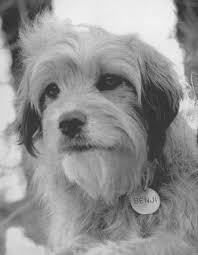
On October 17, 1974 the film Benji opens in theaters and becomes an instant family classic.  The lovable film about a stray dog who helped rescue a group of kidnapped children, starred a scruffy mutt named Higgins who himself was rescued from a California animal shelter.  Though Higgins had appeared in a number of TV shows and movies, the success of Benji was more than he could handle.  Under the watchful eye of the paparazzi, Higgins’ life spiraled out of control in a blur of partying, drinking and a rather serious cocaine addiction.  While in an out of rehab throughout the later 1970’s and early 80’s, Higgins made a series of unsuccessful Benji sequels, but was noticeably intoxicated in all of them.

Higgins reached “rock bottom” on October 19, 1982, when he was arrested along with automaker John DeLorean in a Los Angeles motel during a failed drug deal.  John DeLorean was caught with a suitcase containing $24 million in cocaine, the sale of which was meant to help salvage his sinking DeLorean Motor Company.  It is unclear whether Higgins was present at the drug deal as a prospective buyer, but he was taken into custody none-the-less.  DeLorean was later acquitted of the crime on the grounds of entrapment by the government and Higgins was released because he was a dog.

*Higgins’ mugshot on Oct. 19, 1984.      Benji

Their time in prison made Higgins and DeLorean fast friends and shortly after their release (in a drug induced stupor) they made plans to turn DeLorean’s signature care into a time machine to go back and warn their past selves of the troubles ahead.  Though obviously unsuccessful, their stories were so detailed and thorough that many began to believed them to be true.  They even became the basis of the 1985 film Back To The Future and the 1990 sequel Back To The Future III (not Back To The Future II… that was a bunch of b.s.), in which Michael J. Fox plays the part of Higgins and Christopher Lloyd captured perfectly the cocaine addled John Delorean as the jittery Doc Brown.

October 9 & 12, 1492 – Lactose Intolerant Vikings

On October 12, 1492, Christopher Columbus landed his fleet of three ships on the Caribbean island of San Salvador (in the modern day Bahamas) effectively “discovering” the new world of the Americas.  Over the next few years, Columbus made four total voyages to the New World, with the indigenous people becoming less and less impressed with his discoveries of the land they already inhabited.  For the remainder of his life, Columbus never recognized the fact that he had stumbled upon a new continent, but instead thought that he had indeed found a new route to the East Indies.  Thanks to the launch of Google Maps in 2005 we now know this to be untrue.

In 1906, Colorado became the first U.S. state to dedicate a day to honor Columbus’ pseudo-discoveries.  This made a tremendous amount of sense, because who better to celebrate the accomplishments of a seafaring Italian from the east, than a western, landlocked state full of forest dwelling mountain people?  Anyway, it only took 28 years, but the Christopher Columbus bug finally caught on (not to be confused with the variety of viruses he gave to the indigenous people he met) and Columbus Day became a national holiday in 1934.

Most people don’t know, but Christopher Columbus is not the only person to sort of discover the Americas and have a sort of holiday named after them.  In fact, October 9th is recognized as Leif Erikson Day after the Viking explorer who “discovered” what is modern day Newfoundland in Canada, nearly 500 years before Columbus.  Erikson even went so far as to establish a settlement on the island, but was forced to abandon it citing “crippling boredom” as the reason.  It is also said the the Viking explorer was lactose intolerant and could not handle all the Poutine which is still a favorite Canadian dish to this day.  This is why it is customary to avoid dairy products on October 9th in Canada and why only about eight people live in Newfoundland.  In actuality, Erikson actually spent more time in the neighboring province of Labrador, because as everyone knows this is where labrador puppies come from and Vikings love puppies.

Leif_Ericson*Leif Erikson looking for a restroom after eating to much Poutine.

October 1, 1890 – Cartoon National Park

On October 1, 1890, the U.S. Congress effectively signs 1,500 square miles of California’s Sierra Nevadas, as Yosemite National Park.  Though most people are familiar with Yosemite National Park, below are some little known facts that will probably be new to you:

1.   Yosemite National Park derived its name from the battle cry of the Native Americans who originally called it home.  The battle cry being “Yo-che-ma-te” roughly translated to “some among them are killers”.  Though clearly a rather lame battle cry, this suggestion was one of only two submitted to Congress and was deemed more favorable than “Yo-ma-ma-phat” which translated to “Oh crap, the white people are coming.”

2.   In 1909, a scruffy haired, mustachioed drifter named Samual Bergden earned moderate national fame after being arrested a record 15 times in the national park for ‘harassing the wildlife”.  Most of his infractions came from using the two revolvers he carried to hunt the parks rabbit population.  Though records indicate he was acquitted in each case for lack of evidence (he was a terrible shot and never hit anything), most believe the judges simply found his hot-headed outbursts of innocuous rants to be endearing and let him off the hook.  After Warner Brothers unveiled their “Yosemite Sam” character in 1945’s Looney Tunes classic “Hair Trigger”, Bergden sued and was able to die a rich man.

3.   A series of bear encounters in the park during the mid-1950’s, generated the park’s second famous cartoon character when Yogi Bear debuted in 1958.  Between 1953 and 1957, there were 17 documented incidents in which Yosemite bears raided and stole camper’s picnic baskets.  They also mauled dozens of people in these incidents, but that was largely left out of the children’s cartoon.

Yosemite_Valley

Thomas Jefferson Carver

“And the final use for peanuts!?!… Murder!”

-Thomas Jefferson Carver, the last line of his “Peanuts, Peanuts, Peanuts!” expo, circa 1934; originally named Wilfred J. Carver, Thomas Jefferson Carver adopted his new moniker to capitalize on the then famous George Washington Carver.  Like his G.W. Carver counterpart, T.J. Carver earned moderate fame for creating new uses for the common peanut, though T.J.’s were much less scientific (i.e. packing peanuts were originally just peanuts before the invention of styrofoam).  In March of 1934, as the grand finale in his keynote speech at the “Peanuts, Peanuts, Peanuts!” expo in New York City, Thomas Jefferson Carver confessed to a full crowd that he had murdered his estranged wife, who had a documented peanut allergy.  Carver was arrested on the spot and was soon sentenced to life in prison.  As a result of his brash confession and his signature top hat, monocle and cane, Carver became somewhat of a celebrity inside the walls of Sing Sing Prison and earned the nickname, Mr. Peanut.  After his death in 1942 (ironically choked on a cashew), the Planters Nut Company capitalized on his odd image with their new cartoon mascot.-

“Ask Brett” – History Of Oktoberfest… Kinda – Sept. 22

On September 20, N.S. wrote:

Happy 1st day of Oktoberfest 2014! Do you have any historical insight regarding this party?

Dear N.S.

First and foremost, yes.  I do have historical insights regarding this celebration.  For those who don’t know, Oktoberfest is a German/Bavarian beer fueled festival that is sandwiched between two less popular festivals: Sekstempberfest and Nokemberfest.  The latter being a month long festival celebrating unique and often elaborate hangover remedies, the former being self explanatory.

The origin of Oktoberfest dates back to 1810 and was originally a festival celebrating the marriage of two German royals.  Over the years, the celebration evolved (let’s face it, ideas always get more elaborate after a few beers) into the 16 day celebration it is today.  Historically, the Oktoberfest celebration would conclude on the first Sunday of Oktober, but in 1994 the rules changed so that the earliest the celebration could end is October 3rd, which is Germany’s “Unity Day”, the day in which they celebrate East and West Germany being reunited.  What you probably don’t know is that “Unity Day” also celebrates the reunification of North and South Germany after a brief (four hour) civil war erupted in 1992 over who loved David Hasselhoff more.  This is why if the last day of Oktoberfest lands exactly on October 3rd, it is customary for all participants to wear bright red swim trunks and fake chest hair; thus proving once and for all that, in the words of the great news caster Norm Macdonald, “Germans LOVE David Hasselhoff”.

Hope this helps.

Brett

Sept 16, 1620 – The Speedwell And Hemingway’s Cats

On September 16, 1620, the now famous Mayflower departed England on its path for the New World.  What you probably don’t know is that this was not the only ship to leave the English port of Southampton that week, bound for the New World.  Below is the story of the Speedwell, the Mayflower’s ill fated sister ship and the striking parallels in their journey to the America’s.

In August 1620, the Mayflower and the Speedwell, captained by John Thomas Chappell, had attempted to depart England twice, but were forced to return to port both times, as the Speedwell proved unseaworthy.  To the dismay of Captain Chappell and the Speedwell passengers, it was decided that the Mayflower would go on the voyage alone.  At the time, maritime travel was run a lot like modern day airlines and tickets were non refundable. Speedwell passengers were offered vouchers for the port’s only hotel, the Southampton Inn, which most of them opted for.  It wasn’t until the following day when many of the passengers discovered that the vouchers did not cover meal expenses, did they became enraged and returned to the port.  Fortunately for the passengers, (and more likely for the ship’s crew) Captain Chappell, motivated by delinquent child support payments, had hired a crew of men to repair his leaking vessel.  By the next morning the crew had pinpointed the origin of the leak to be a gaping cannon ball hole in the bow, which Captain Cappell comment in retrospect “seemed pretty obvious”.

With their ship watertight once again, the Speedwell set sail that same night and Captain Chappell became obsessed with making up the lost day and catching the Mayflower before it reached the new world.  Unbenounced to Chappell, rough seas had pushed the Mayflower off course, which resulted in it landing 500 miles north of their intended destination on the American coast.  Encountering similar rough seas in the days following, the Speedwell was also thrown off course, but in the opposite direction.  Landing about 1000 miles south of their intended destination, the Speedwell became the first English vessel to land on what is now modern day Key West which was then considered Spanish territory.

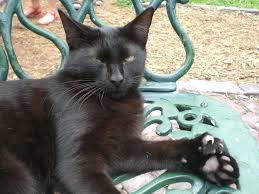
Like their freezing and starving Mayflower counterparts, the crew and passengers of the Speedwell had a rough first winter in their new settlement as well.  The Spanish merchant ships that passed the island proved to be infrequent and the settlement was constantly running out on of their supply of rum.  In the Spring months, the settlers began to explore the island more in an effort to make contact with native inhabitants.  In a chilling discovery, the settlers found that the island was largely covered in bones, as native tribes had used the area as a communal burial ground for many years.  To add to the mystery of the island, the settlers often noticed roving clowders of polydactyl cats (house cats with abnormal amounts of toes) constantly watching them.  By late November of that year, the settlers paranoia over the creepy cats had reached a feverpitch.  In a last ditch effort to appease the cats, Captain Chappell and the settlers invited the cats into their walls for a feast of ocean fish and goat’s milk.  A sort of “thanks giving” for their good fortune over the last year.  This is the last recorded history of the little known Speedwell Settlement of Key West, but it is often assumed that part way through the dinner, the cats turned on the settlers and devoured them.

*Some of Hemingway’s cats were polydactyl cats and likely descended from this same group that plagued the Speedwell Settlement.  Some of their bloodline still reside in the Hemingway house on Key West… waiting for their next victims.

Hemingway's Cat

William Shakespeare

“The eyes are the window to the soul… and the mouth is the front door to the soul…. which makes thine head the soul’s house.  I would venture thine ears serve as some sort of irregularly shaped chimney or something, but I doth not know for certain. Thus, the point I’m trying to pass tis that a man’s home is his castle, so it doth makes sense that a soul’s home would be its castle…. therefore thine head be a castle.  Halt… about what were we conversing?”

– William Shakespeare, circa 1615; it’s often debated as to whether or not the opening line of this quote was a Shakespeare original. It is known, however, that in his later years Bill would often hang around his bar (MacBeth’s Scottish Bar & Grill) and make drunkenly profound statements to anyone who would listen to his incoherent ramblings.  Most nights would end with him challenging bar patrons to do shots of whiskey out of the prop skull used in his production of Hamlet.-